Showing posts with label WAR. Show all posts

Wednesday, January 29, 2025

The Deadly Ambush of John Sassamon

When John Sassamon heard rumors of impending danger for Plymouth Colony, he had to warn them. Sassamon was pivotal in the complicated relationship between colonists and Native Americans. Born in the Massachusett tribe around 1620 when the Pilgrims arrived, Sassamon became a living symbol of the collision of European and ancient American cultures.

john sassamon warns plymouthe colony in winter

Sassamon was mentored in the English language and Christian religion, becoming an interpreter and intermediary between settlers and native people. As an intelligent and eager learner, he was sent to Harvard College. He worked closely with missionary John Eliot to establish communities for Native American Christians and helped translate the Bible into native languages. 

The aging Massasoit, the Wampanoag leader who first formed the alliance with Plymouth Colony, relied on Sassamon as an interpreter and advisor. When Massasoit died, his son Metacom (known as King Phillip) eventually became chief, and the bridge of peace between the two communities fractured even more, with Sassamon caught in the middle. 

In the cold of winter, Sassamon went to warn Plymouth leaders of an impending attack by Metacom, but his warning was dismissed and he was sent home unprotected. On January 29, 1675, John Sassamon was found dead in an icy pond, his neck twisted. A native American said he witnessed three of Metacom's men kill Sassamon. The men were put on trial, and a jury of six colonists and six Wampanoags found them guilty. Their execution ignited one of the bloodiest conflicts on American soil – King Philip's War. 

*****

“The wicked watched the righteous, and seeketh to slay him.”

(Psalms 37:32; 1599 Geneva Bible)

Thursday, January 2, 2025

Compulsory Military Service Begins

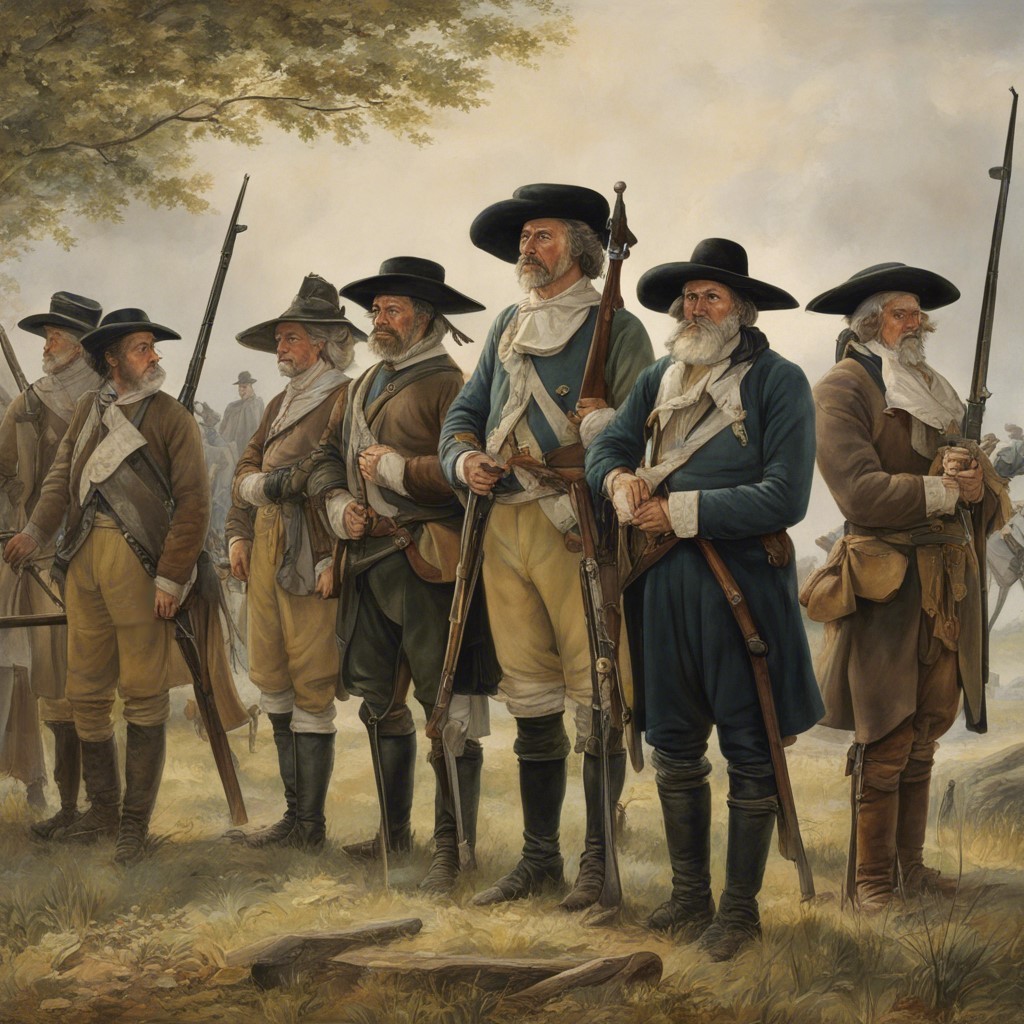
Security was an issue for the Plymouth Pilgrims since the day they landed in 1620, but over time they strengthened their defenses for any unexpected dangers. 

A visitor from New Amsterdam colony visited Plymouth in 1627. Isaack de Rasieres noticed how their homes were arranged within a "stockade against sudden attack," and in the center of the village were four small swivel cannons. Their meetinghouse overlooking the village held six larger cannons on the upper floor, able to fire toward any inland attacks. According to de Rasieres, they were "constantly on their guard night and day." 


As the population grew, security became more challenging. Colonists spread deeper into Native American territory, making it difficult to retreat within the barricaded village. Tensions grew as native populations competed for trading rights with the colonies. Then war broke out between the Pequot nation and English colonists, ending with a fiery massacre of hundreds of Pequots, horrifying both colonists and Native Americans. The English colonies later created a defensive alliance in case of further clashes. 

While Plymouth had little trouble gathering volunteers for defense, on January 2, 1634 colony leaders demanded that every man be involved in the militia. Without exception for ministers or government officials, the law required “every person within the colony be subject to such military order for training and exercise of arms as shall be thought suitable, agreed on, and prescribed by the governor and assistants." The peace the Pilgrims enjoyed in those earliest years just could not last. 

*****

“And ye shall hear of wars, and rumors of wars: see that ye be not troubled: for all these things must come to pass, but the end is not yet.”

(Matthew 24:6; 1599 Geneva Bible)

Wednesday, January 3, 2024

King Charles and the Five Fugitive Birds

King Charles I's relationship with the Puritans in Parliament fragmented as they unceasingly demanded religious reform. His marriage to the French Catholic Queen further aggravated his rift with the radical Protestants. When he heard rumors that Parliament members encouraged Scotland to rebel against his religious authority, Charles was incensed. On January 3, 1642, the king’s Attorney General read articles of impeachment against five elected officials. Since no one in Parliament supported the charges, the king himself marched to the House of Commons the following day with dozens of armed guards to arrest the five men. 


Taking over the speaker’s chair, the king called out the names of the suspects, one by one, but no one responded. Charles looked to Speaker William Lenthall for help, but Lenthall merely bowed and said he could only reply as directed by the House of Commons, and he "cannot give any other answer than this."

Realizing his enemies had slipped away, the King said, "I see the birds have flown," and he stomped out. London's officials also refused to help the King hunt down the wanted men. When rumors circulated that Charles was sending soldiers into the city to force cooperation, men poured in to defend London against the King's army, fueling the fire for an approaching civil war and royal execution. 

Charles' actions triggered a wave of unrest that rippled across the Atlantic to the American colonies, spurring greater economic and political autonomy, and a thirst for independence from the English crown. 

*****

“He hath put down the mighty from their seats, and exalted them of low degree.”

(Luke 1:52; 1599 Geneva Bible)

Beheading of an Authoritarian Archbishop

On a cold winter morning Archbishop William Laud climbed the scaffold on Tower Hill to the executioner's block. The short man who once ...