Wednesday, February 14, 2024

A Puritan's Love on Valentine's Day

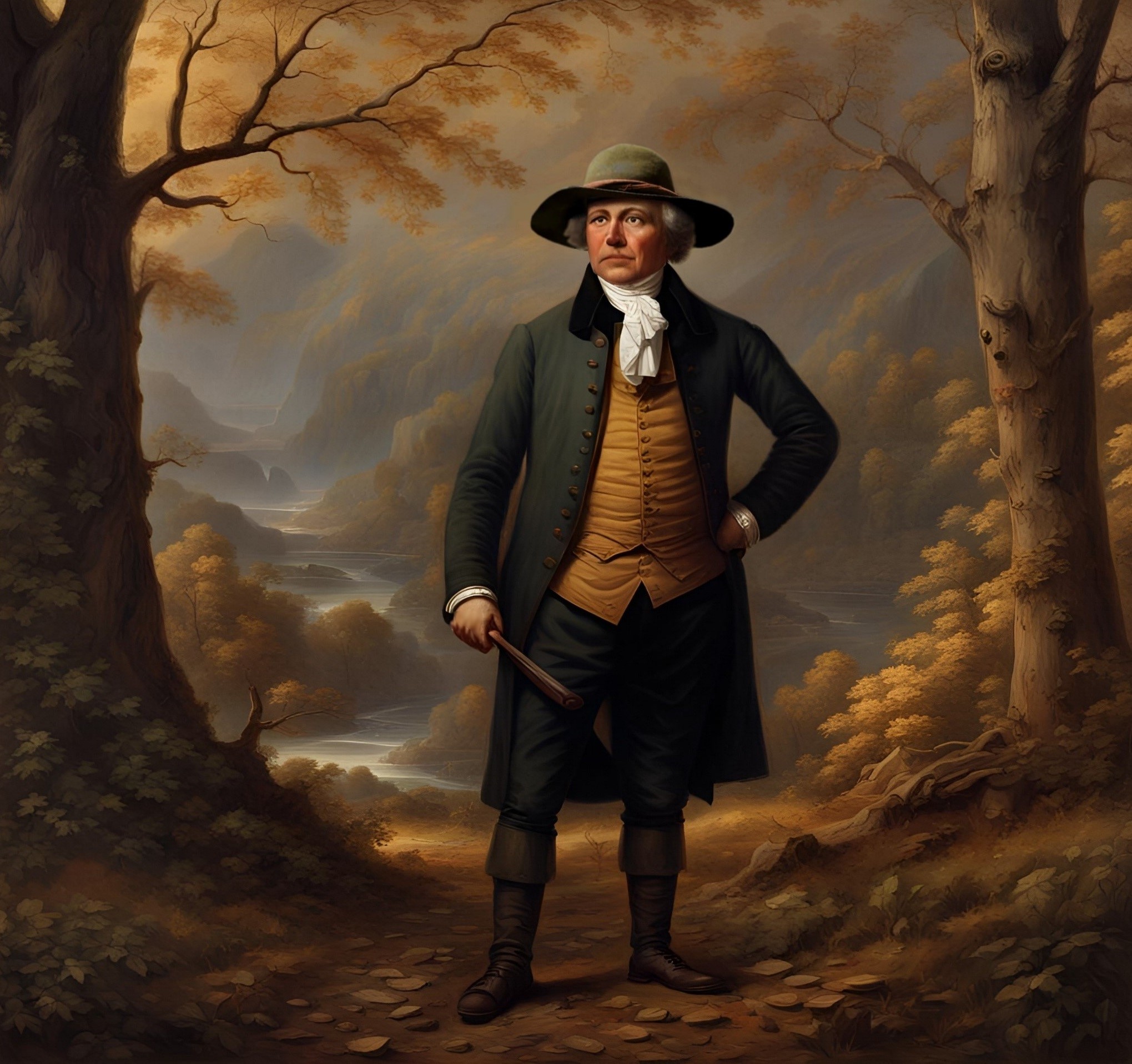
John Winthrop (future leader of Massachusetts Bay Colony) worked long stretches in London as his wife remained in Suffolk, and their letters are ideals of Puritan romance. (Those letters are freely available on GoogleBooks by clicking this link.) The following letter from John Winthrop to Margaret is surprising in its reference to Valentine’s Day given Puritan's usual disregard of Catholic or "pagan" traditions. Perhaps Shakespeare's romantic tales, popular in Winthrop’s day, may have influenced him. Winthrop departed for America soon after this letter, while Margaret would join him a year later. 

[NOTE: I’ve carefully modernized this letter for clarity, but you can see the original text just below. DWW]

My sweet wife, 

Since I have a suitable messenger to bring you this letter, and I’ve such deep feelings of affection for you, I take this time to write, though I hope to be with you soon. 

The Lord our God has often brought us together in comfort when we have long been apart, and if it is good for us, he will yet do so. When I was in Ireland, he brought us together again. When I was sick here in London, he restored us together again. How many dangers, even brushes with death, have you experienced, yet the Lord has given me the joy of still having you?

If he was not watching over us, death and misery would not only be waiting for us just overseas but at every step in every journey. And isn’t he the God there at America as well as at home? Aren’t his power and plans the same in New England as they’ve been in Old England? If our lives please him, he can command deliverance and safety in all places and can make the stones and beasts, even raging seas and our very enemies, to be upon our side. But, if we sin against him, he can raise up evil against us out of our own bellies, houses, or estates. 

My good wife, trust in the Lord who has been faithful to you. He will be better to you than any husband and will bring your husband back again with even more blessing. 

But now I must close, with all the warm greetings I have given this awaiting messenger to send so that he will be all the more glad to help. 

I kiss you, my sweet wife, and bless you and our family, and now I rest. 

   Ever yours,
John Winthrop
February 14, 1629

You must be my valentine, for no one has challenged me.*

* This is likely a touch of humor – John is playfully grateful that no one has taken Margaret away from him (i.e., “challenged” him). 

___________________________

Here is John Winthrop's Valentine letter in his original wording and spelling: 

My sweet wife,

The opportunitye of so fitt a messinger, and my deepe engagement of Affection to thee, makes me write at this tyme, though I hope to followe soone after. The Lorde our God hath ofte brought vs togither with comfort, when we haue been longe absent, and if it be good for vs, he will doe so still: when I was in Irelande he brought vs togither againe: when I was sicke heer at London, he restored vs togither againe: how many dangers neer death hast thou been in thy selfe and yet the Lorde hath granted me to inioye thee still: if he did not watch ouer vs, we need not goe ouer sea to seeke death or miserye, we should meet it at euery steppe, in euerye iournye: and is not he a God abroad as well as at home? is not his power and prouidence the same in N E that it hath been in old E if our wayes please him he can commande deliuerance and safetye in all places, and can make the stones of the feild, and the beastes yea, the raginge seas and our verye enemies, to be in league with vs. but if we sinn against him, he can rayse vp euill against vs out of our owne bowells, howses, estates etc. my good wife, trust in the Lorde, whom thou hast found faithfull, he wilbe better to thee then any husband: and will restore thee thy husband with aduantage: but I must ende: with all our salutations with which I haue laden this bearer, that he may be the more kindly wellcome: So I kisse my sweet wife and blesse thee and all ours, and rest.”

Thine ever, 
Jo. Winthrop
February 14, 1629. 

Thou must be my valentine, for none hath challenged me.

*****

“So ought men to love their wives, as their own bodies: he that loveth his wife, loveth himself.”

(Ephesians 5:28; 1599 Geneva Bible)

Winthrop family home (Suffolk, England)

Friday, February 2, 2024

The Litigious Life of John Barnes

John Barnes, an English emigrant to Plymouth colony, was no stranger to controversy. Court records reveal a man prone to conflict, crudeness, and inebriation. On February 2, 1657, tensions flared when Barnes accused Edward Holman of luring his young servant away from work duties to go on leisure boat trips to Duxbury. The court fined Holman and promised to double the fine if it happened again. 

Early New England tavern

The two had a history of conflict. Years earlier both Holman and Barnes were fined for drunkenness on a Sunday, and Barnes, a wealthy businessman, was even sentenced to sit in the stocks. Another time Barnes was ordered to pay Holman compensation for a wrongful land deal. 

Mr. Barnes’ drinking problem continued to be an issue, leading to multiple court appearances, warnings, and even threats to punish both the establishments that served him and the people who drank with him. His "frequent and abominable drunkenness" led to a revocation of his Plymouth citizenship.

Plymouth records show that Barnes was later in court for land disputes, trespassing, harassing his neighbor's children, striking both a neighbor's son and his horse, and was yet again fined for drunkenness.  

The last mention of John Barnes in the Plymouth court records was in 1672 when a jury was called to determine his cause of death. Apparently, the sixty-year-old man was petting his bull when it turned and gored him in the leg with its horn. The wound was "both broad and deep," and he died thirty-two hours later. 

*****

“As the coal maketh burning coals, and wood a fire, so the contentious man is apt to kindle strife.”

(Proverbs 26:21; 1599 Geneva Bible)

Sunday, January 7, 2024

Governor Eaton’s Final “Goodnight”

Anne had often expressed her desire to leave the colonies and go back to England, but her husband would always dismiss the idea. Theophilus Eaton, the wealthy and influential merchant, had invested far too much in their New England colony to abandon it. Eaton was one of the original investors and organizers of the Massachusetts Bay project, even before John Winthrop set sail from England with 800 colonists packed into eleven ships.


In 1637, Eaton and his lifelong friend, Reverend John Davenport, left England with two shiploads of colonists, driven by their dreams of a Puritan haven and financial opportunity. When they arrived in Boston, they found that Winthrop's conservative Puritan community was not conservative enough. Months later, they led hundreds of their people south along the coast to finally establish their well-financed religious utopia of New Haven. Eaton's stern and opinionated leadership sometimes caused controversy, but he was still elected governor every year for the rest of his life.

On the evening of January 7, 1658, Eaton felt unwell. After a meal, prayers, and Bible reading with the family, he said goodnight to his wife. Anne thought he looked sad. When he told her he was troubled by the conflicts in their community, she suggested once again that they return to England. "You may,” he said, “but I will die here." And that very night, he did. Shortly thereafter, Anne Eaton, long weary of life in the colonies, sailed back to spend her final days at home—in England.

*****

“But Moses’ father-in-law said unto him, The thing which thou doest, is not well. Thou both weariest thyself greatly, and this people that is with thee: for the thing is too heavy for thee: thou art not able to do it thyself alone.”

(Exodus 18:17-18; 1599 Geneva Bible)

Saturday, January 6, 2024

The Consequences of Virginia's Tobacco Victory

Soon after the days of Columbus, tobacco was embedded in European culture, with Spain and Portugal leading the way in cultivating and shipping it. Meanwhile, in Virginia, the struggling colony of Jamestown stopped their futile search for precious metals when they found another kind of gold in the thriving tobacco fields of the Powhatan people on Virginia's fertile coastal plains. And when John Rolfe began growing a sweeter variety of tobacco, England's share in the market surged. 

To secure England's new source of revenue, King Charles I issued his Tobacco Proclamation on January 6, 1630. The proclamation granted the Virginia colonists exclusive rights to grow and export tobacco for the English market and regulated the quality of imported tobacco through inspections.

American-grown tobacco became a lucrative cash crop as Europe's rising demand propelled the colony's thriving industry, boosting England's economy. Virginia tobacco was so in demand that it soon became used as currency, even into the early days of the newly established American States.  

However, soon the unintended and unexpected impacts came to light. The expansion of tobacco cultivation led to an elimination of forests, and land erosion, and exacerbated existing conflicts between European colonies and displaced Native Americans. Tobacco's overproduction depleted the soil nutrients and devastated Virginia's economy, widening the gap between social classes in the colony. Worst of all, the tobacco industry's heavy demand for laborers outpaced the supply of European servants, which soon led to the brutal nightmare of the African slave trade

*****

“For they that will be rich, fall into tentation and snares, and into many foolish and noisome lusts, which drown men in perdition and destruction.”

(1 Timothy 6:9; 1599 Geneva Bible)


Sparks and Straw: Plymouth's Roof Law

The charming thatched roofs in today's English countryside have a history going back over 4000 years. English colonists of the 1600s had no reason to doubt the durability of thatch for their homes along America's eastern coastline. 


Traditional thatching uses materials like straw and water reed over a base of sticks or woven mats. The meticulous layering process, tying down bundles of straw, offers surprising insulation, waterproofing, and protection against wind and hail. Fire, however, was their greatest hazard. 

Within each one-room Pilgrim home was a place on their dirt floor for a fire for cooking and warmth. Their earliest homes, including their chimneys, were all made of wood and mud. The Mayflower passengers were not unfamiliar with stone construction, but wood was abundant, easy to shape, and ideal for creating fast structures with a brutal winter looming. 

A dozen years before Plymouth was founded, the Jamestown settlement to the south suffered a fire that burned many buildings in 1608, including their church and much of the supplies that had just arrived from England. The vulnerability of Plymouth's structures soon came to light as their main building burned to the ground weeks after they finished it. Two years later more Plymouth homes were set aflame from a fire likely caused by drunken sailors. 

In view of this, it is no surprise that on January 6, 1627, Plymouth leaders made a law that "from henceforth, no dwelling house was to be covered with any kind of thatch." 

*****

“The fire shall try every man’s work of what sort it is.... If any man’s work burn, he shall lose, but he shall be saved himself: nevertheless yet as it were by the fire.”

(1 Corinthians 3:13 & 15; 1599 Geneva Bible)

Friday, January 5, 2024

Anne Clarke’s Heartbreaking Victory

In the heart of Puritan New England, where piety clashes with humanity, Anne Clarke stood before the stern faces of Boston's magistrates asking for divorce. None had ever been granted before in the rapidly growing colony of Massachusetts Bay. Her fate, and that of her children, would be in the hands of the court, but she was more than prepared to make her case. 

Anne Clarke makes her case in court

Anne filed for divorce from her husband on the grounds of marital abandonment and adultery. Given his calloused nature toward his wife and children, Mr. Clark gave Anne a surprising gift that would make the process easy. He wrote out a signed affidavit in which he clearly explained that he had knowingly and purposefully abandoned his wife, he had no desire to return to her, and he was now living with another woman. 

Divorce among Puritan communities was not illegal, but strongly discouraged. Adultery was the most common grounds for divorce, but desertion and cruelty were also accepted as legal cause. However, women had the greater challenge obtaining a divorce, requiring higher standards of proof for their spouse’s offences. 

Fortunately for Anne, the facts were clear. Not only was her husband open and unrepentant about his ongoing affair, but he had also fathered two children with the other woman. 

In a ruling recorded on January 5, 1643, the court noted that Denis Clarke had indeed deserted his wife, refused to return, and confessed to living in adultery, so therefore Anne Clarke “is granted to be divorced."

*****

“If there be any that provideth not for his own, and namely for them of his household, he denieth the faith, and is worse than an infidel.”

(1 Timothy 5:8; 1599 Geneva Bible)


Wednesday, January 3, 2024

King Charles and the Five Fugitive Birds

King Charles I's relationship with the Puritans in Parliament fragmented as they unceasingly demanded religious reform. His marriage to the French Catholic Queen further aggravated his rift with the radical Protestants. When he heard rumors that Parliament members encouraged Scotland to rebel against his religious authority, Charles was incensed. On January 3, 1642, the king’s Attorney General read articles of impeachment against five elected officials. Since no one in Parliament supported the charges, the king himself marched to the House of Commons the following day with dozens of armed guards to arrest the five men. 


Taking over the speaker’s chair, the king called out the names of the suspects, one by one, but no one responded. Charles looked to Speaker William Lenthall for help, but Lenthall merely bowed and said he could only reply as directed by the House of Commons, and he "cannot give any other answer than this."

Realizing his enemies had slipped away, the King said, "I see the birds have flown," and he stomped out. London's officials also refused to help the King hunt down the wanted men. When rumors circulated that Charles was sending soldiers into the city to force cooperation, men poured in to defend London against the King's army, fueling the fire for an approaching civil war and royal execution. 

Charles' actions triggered a wave of unrest that rippled across the Atlantic to the American colonies, spurring greater economic and political autonomy, and a thirst for independence from the English crown. 

*****

“He hath put down the mighty from their seats, and exalted them of low degree.”

(Luke 1:52; 1599 Geneva Bible)

Beheading of an Authoritarian Archbishop

On a cold winter morning Archbishop William Laud climbed the scaffold on Tower Hill to the executioner's block. The short man who once ...